

Why Do Current Dental Implants Fail
Current dental implants are made of a screw-like titanium post that is placed directly into the jawbone. Titanium is used due to its superior biocompatibility and its ability to osseointegrate with the surrounding jawbone.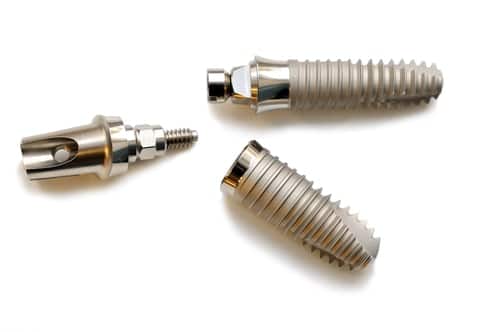 In very rare situations, the titanium implant becomes loose causing serious complications for the patient. Some of the most common reasons that dental implants become loose are:
- Failure of osseointegration between the implant and the bone tissue
- Infection of the surgical area
- In rare cases, the body may even reject having a titanium implant
How Are Nanotube Dental Implants Different
Nanotube dental implants have an incredible design that should eliminate the major problems with current dental implants, increasing the success rate to nearly 100%. These new implants will be similar in the sense that they will be a post like structure that is placed directly into the jawbone, but what makes them different is that the post like structure will be made up of a large number of tiny nanotubes instead of being a solid titanium post.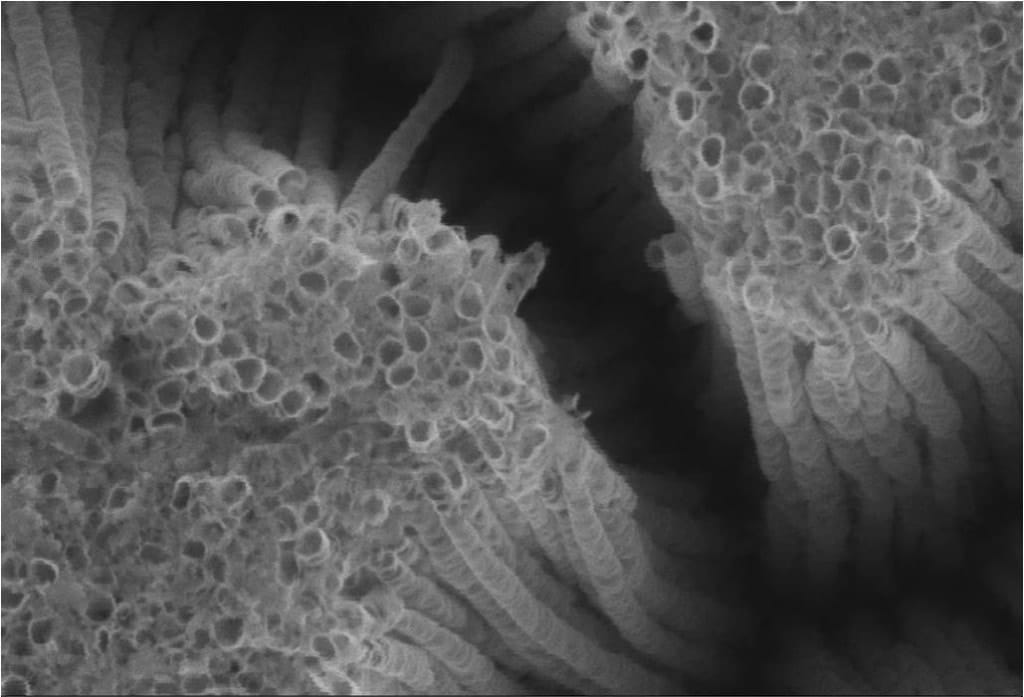 To the naked eye, nanotube implants will not look much different from current implants, but their functionality will differ quite substantially.
Why Will Nanotube Dental Implants Be Superior
There are several reasons that nanotube dental implants will be superior from the current dental implant design. First of all, nanotube dental implants will have greater surface area contact with the surrounding bone structure, making it easier to fuse with the surrounding jawbone. As a result, there will be a much stronger bond between the implant and surrounding bone structure which should take less time to fuse.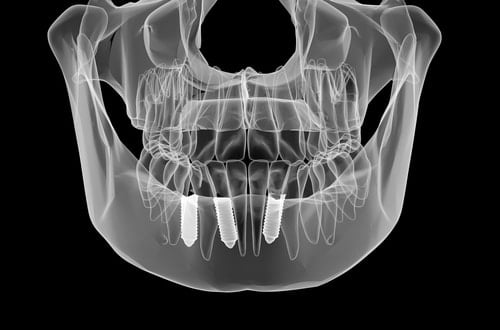 These nanotubes can also be infused with sodium naproxen, an anti-inflammatory drug that will significantly help with the healing time after surgery. This drug can be slowly released to reduce inflammation and eliminate the risk of infection. To further fight any infections that may become present, the nanotubes can also be laced with silver nanoparticles, which are known to have antimicrobial properties and can help fight infections for the lifetime of the implant.